-
KanBo Installation
- KanBo Installation Guide (Microsoft 365 + Azure)
- KanBo Installation Guide (On-Premises)
- KanBo On-Premises Installation Requirements and Prerequisites
- Creating an X.509 High-Trust Certificate
- Creating and Updating Elastic Cloud Deployment
- Installing Elasticsearch on Windows
- Installing Elasticsearch on Debian
- Creating a Windows Virtual Machine on Azure for Elasticsearch
- Creating a Linux Based Virtual Machine on Azure for Elasticsearch
- KanBo Modern Web Part Installation
- Supported Browsers
- KanBo Setup
-
KanBo Updates
-
Additional Components
- Installing KanBo Teams App
- Installing KanBo Outlook Add-in
- Installing KanBo Mini Application
- Installing Nintex Integration
- Installing Autodesk BIM Plugin
- Configuring UiPath Integration
- Installing and Configuring Power Automate Integration
- KanBo External User Groups (Active Directory Integration)
- User Auto-Provisioning on First Access (SharePoint Plugin)
- SharePoint Profile Synchronization
- Configuring Sync Targets
- SharePoint Site Collection Balancing and Admin Warnings
- Setting Up BIM Sync WebJob
- Configuring OData Integration for Power BI Desktop
- KanBo PowerShell Commandlets
- Direct Sync of SharePoint Lists with KanBo
- Enabling KanBo Email Notifications (Azure)
- Enabling KanBo Email Notifications (On-Premises)
- Enabling OneDrive Integration in KanBo
- Enabling Sending Card Messages as Emails
- Enabling Sending Emails to KanBo (Microsoft 365 + Azure)
- Enabling Sending Emails to KanBo (On-Premises)
- Show all articles ( 2 ) Collapse Articles
-
Tips & Tricks
- Configuring Document Opening Behavior in KanBo
- Disabling Sleeping Tabs in Browsers
- Disabling Public Space Creation in KanBo
- Checking Certificate Expiration Dates (On-Premises)
- KanBo License ID
- Checking KanBo Version
- Changing the Help URL in KanBo
- Renewing Microsoft Graph Certificate
- Disabling Profile Picture Sync in Profile Sync Job
- Creating and Customizing Profile Sync WebJob
- Configuring KanBo for Microsoft Azure GCC High Environment
-
Troubleshooting
Installing KanBo Teams App
Overview
Integrating KanBo with Microsoft Teams combines KanBo’s project management capabilities with Microsoft Teams’ rich communication features. Workspaces can be synchronised with teams and spaces with channels, allowing users to join related KanBo environments effortlessly. Files added to a Teams channel appear in the corresponding KanBo space, and vice versa, ensuring consistency and easy access across platforms.
Read more about KanBo and Microsoft Teams integration.
Follow the instructions below to connect KanBo to Microsoft Teams.
Creating an Azure Bot
To create an Azure Bot:

- Enter the name you want to use for your bot.
- Choose the subscription and the resource group your KanBo is in.
- Select the regional data residency and the region where your KanBo is located.
- Change the pricing tier to free.
- Leave the rest of the options unchanged (Multi Tenant, Create new Microsoft App ID).
- Select Review + create, and then select Create.
- After creation is complete, go to the Azure Bot and select Settings > Channels.

- Select Microsoft Teams.

- Accept the Terms of Service. Afterwards, leave Microsoft Teams Commercial selected, and than select Apply at the bottom.
- After that, select Configuration.

- Enter the URL of your KanBo (https:// included) at the end of the messaging endpoint, preceded by /plugins/teams-app/bot, and select Apply.
- Next to the Microsoft App ID field, select Manage Password.

- Remove the automatically created client secret and generate a new one by selecting New client secret. We suggest creating a new one for 24 months and naming it “KanBo” to make things clearer.

- Copy the client secret and save it somewhere.
- Next, go to Overview.

- Copy the Application (client) ID and the Directory (tenant) ID for later use.
- Select Add a Redirect URI.

- Select Add a platform > Web.

- In Redirect URI, paste “https://token.botframework.com/.auth/web/redirect”, check Access tokens and ID tokens boxes, and then select Configure.
Granting permissions in Microsoft Entra ID
- Go to Microsoft Entra admin center > App registrations.
- Find the app registration of KanBo and open it.
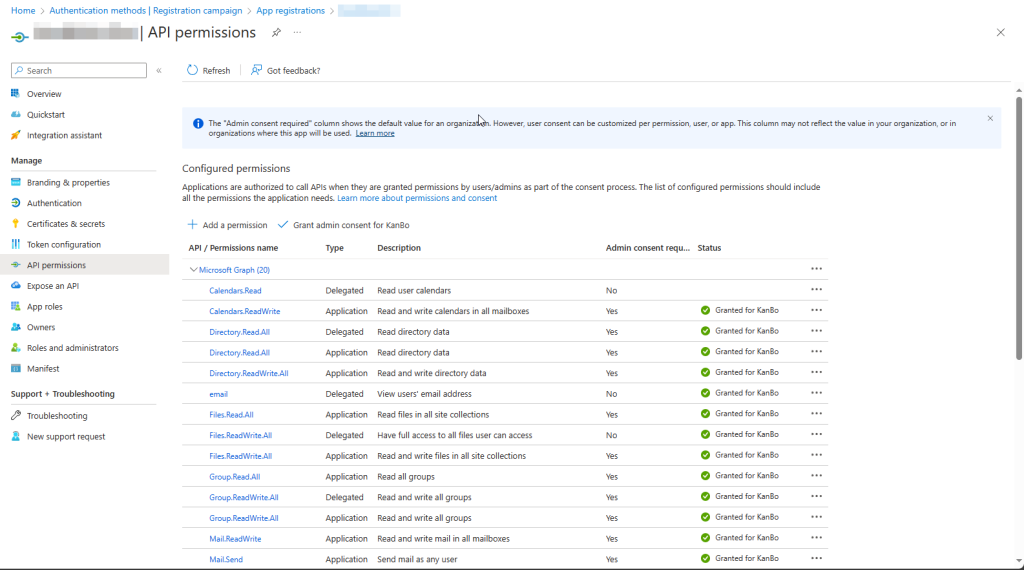
- Go to API permissions.

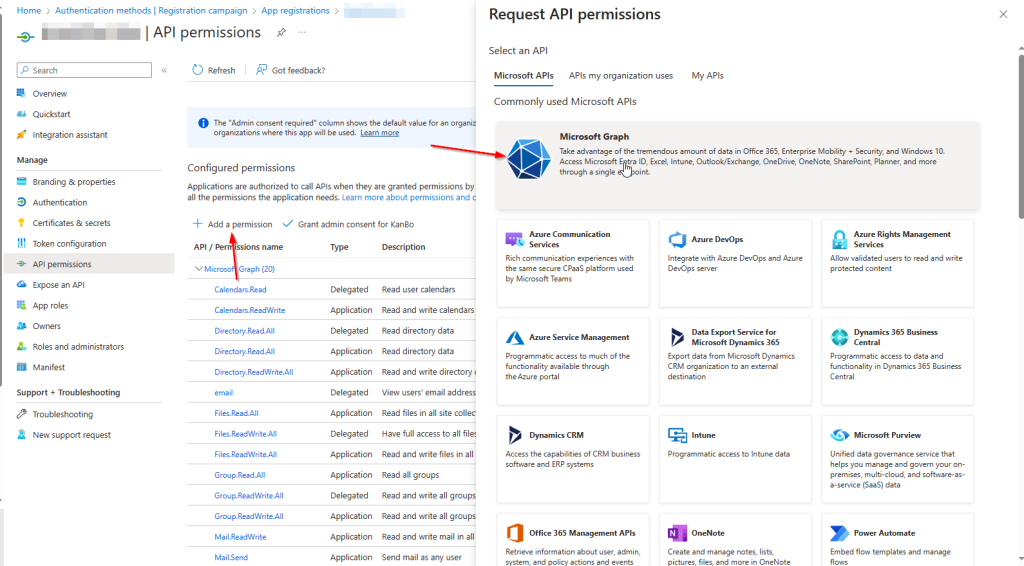
- Select + Add a permission, then select Microsoft Graph.

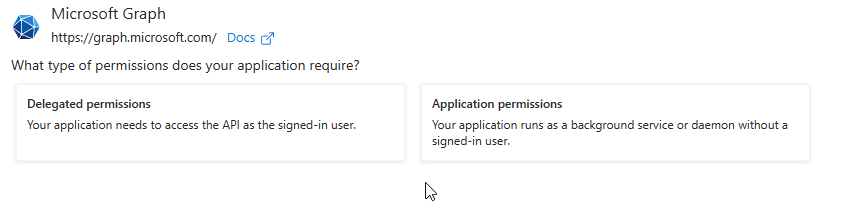
You have the option of choosing between delegated and application permissions.

The registration should include these permissions:
- List of delegated permissions:
- TeamsActivity.Send
- List of application permissions:
- AppCatalog.Read.All
- TeamsAppInstallation.ReadWriteForUser.All
- ChannelMessage.Read.All
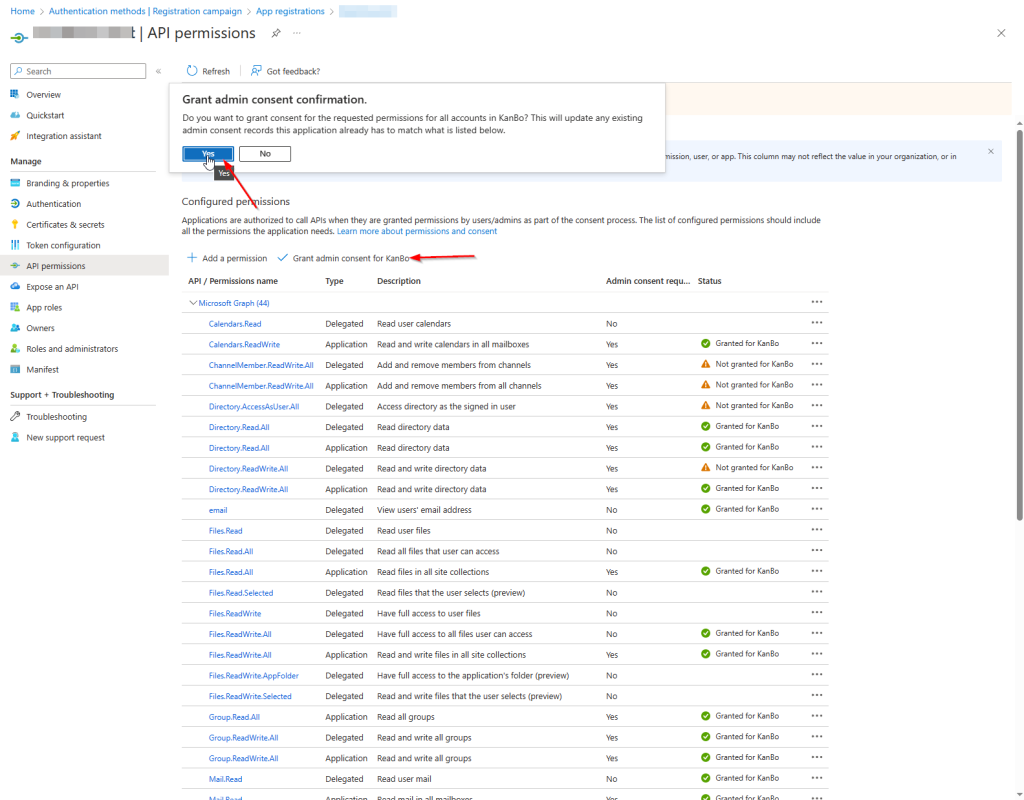
- After adding all the required permissions, select Grant admin consent for KanBo.
- Select Yes.

Configuring KanBo app settings
- Go to the KanBo appsettings.json file and verify that the following lines are present:
{
"type": "teams-app.selfhosted",
"children": [
{
"type": "env",
"children": [
{
"type": "source",
"content-path": "PATH-HERE"
},
{
"type": "teams-app",
"app-name": "KanBo.TeamsApp",
"bot-app-id": "CLIENT ID",
"bot-app-secret": "CLIENT SECRET",
"bot-app-tenant-id": "TENANT ID",
"bot-app-type": "MultiTenant",
"bot-kanbo-connection": "kanbo-connection"
}
]
}
]
}, - Your KanBo folder should contain a folder called “KanBo.TeamsAppPlugin”. Copy the path to this folder and replace “PATH-HERE” in the code with the path.
Remember that the path should have either forward slashes or double backward slashes.
- The Client ID, Client Secret, and Tenant ID are values that you copied when creating and configuring the Azure Bot.
- After that, save the appsettings.json file and restart your KanBo app.
Teams app setup
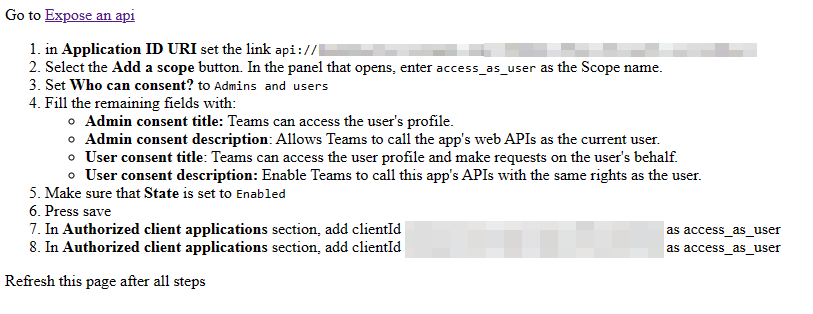
- After restarting KanBo, go to: https://yourkanbourl/plugins/teams-app/setup.
- You should see a page like this:

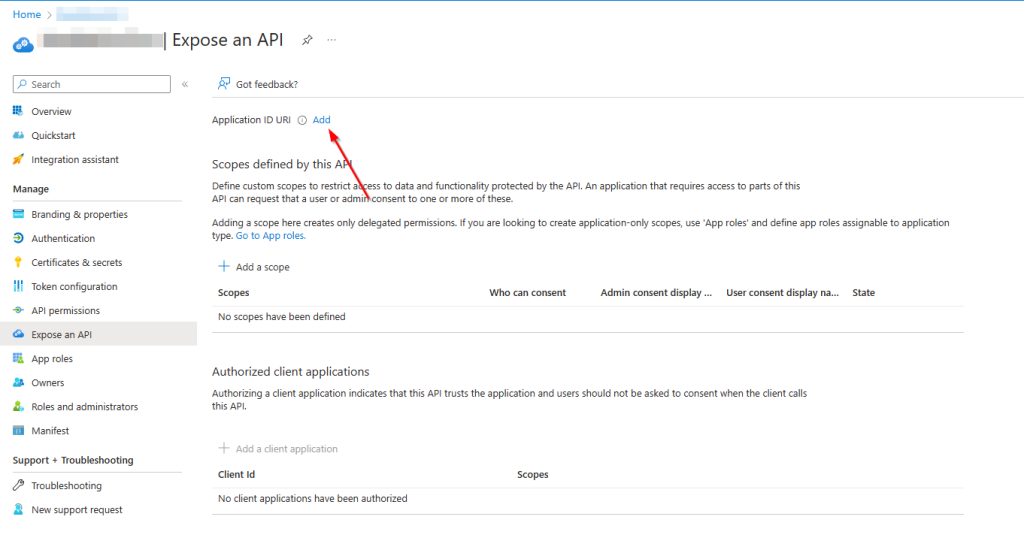
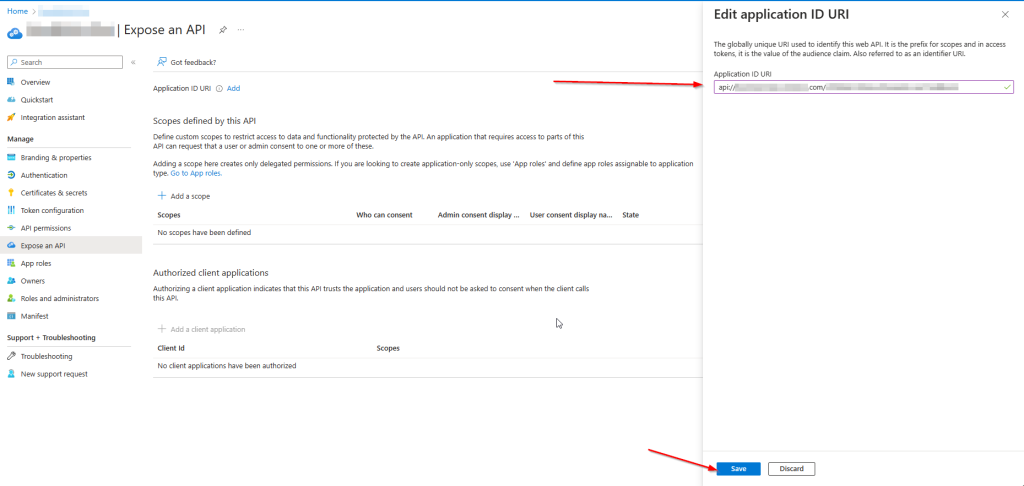
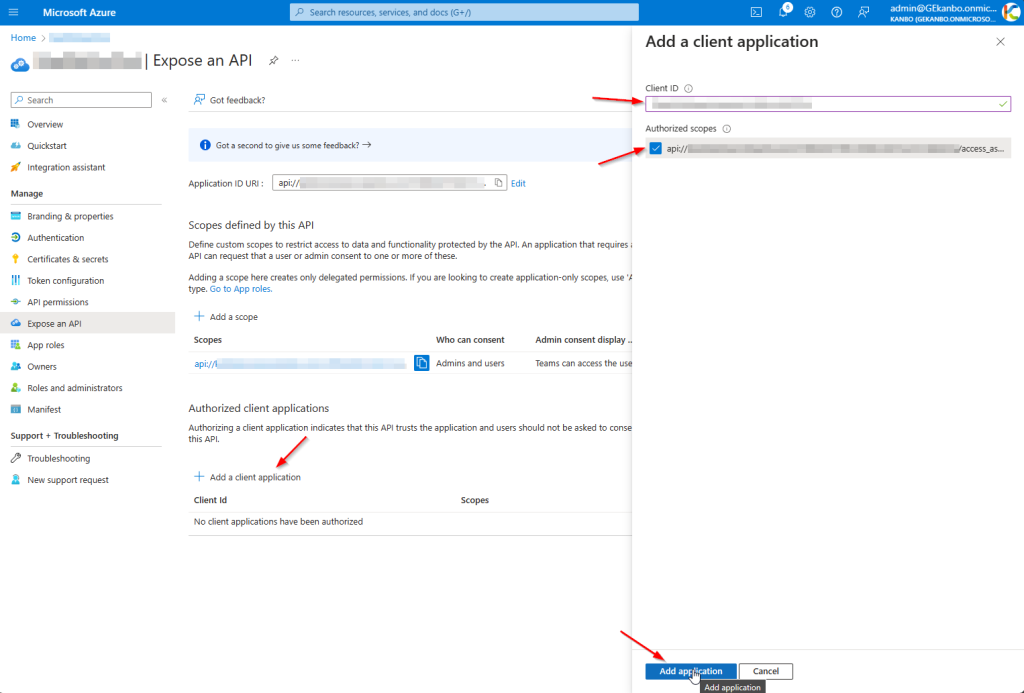
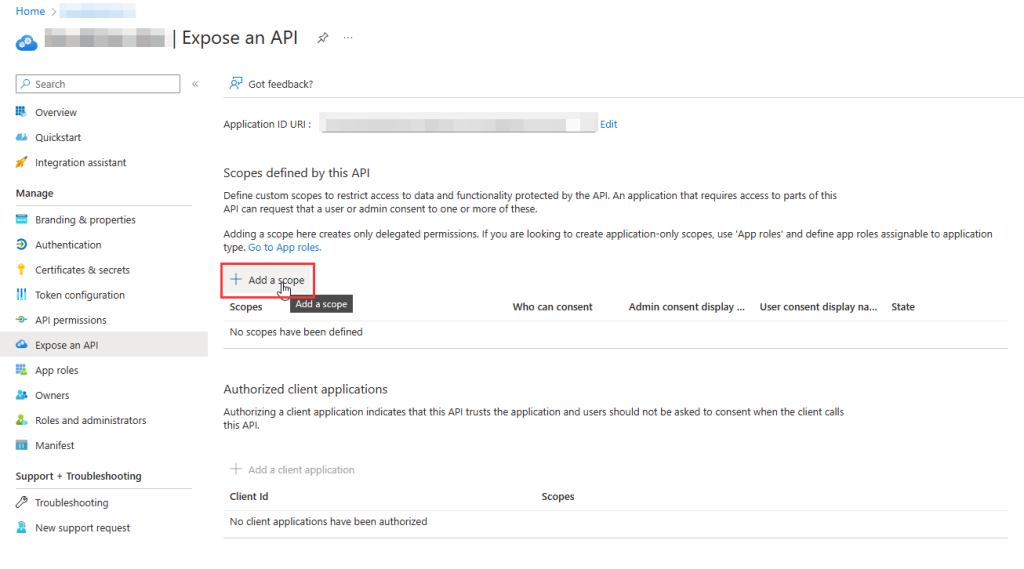
- Select Expose an API, and then next to the Application ID URI, select Add.


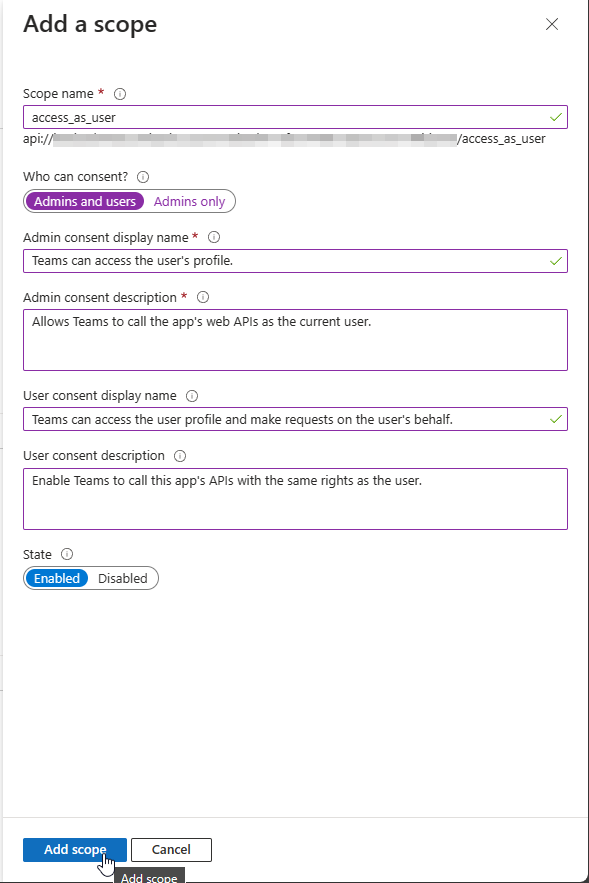
- Select + Add a scope.

- Fill it with the information from the setup page like this:
- From the setup page, add the authorized client applications.

- Go back to the Setup page and refresh it.
- If you completed the previous steps correctly, you should see this after refreshing the page:

- Select this to download the “KanBo.zip” file.
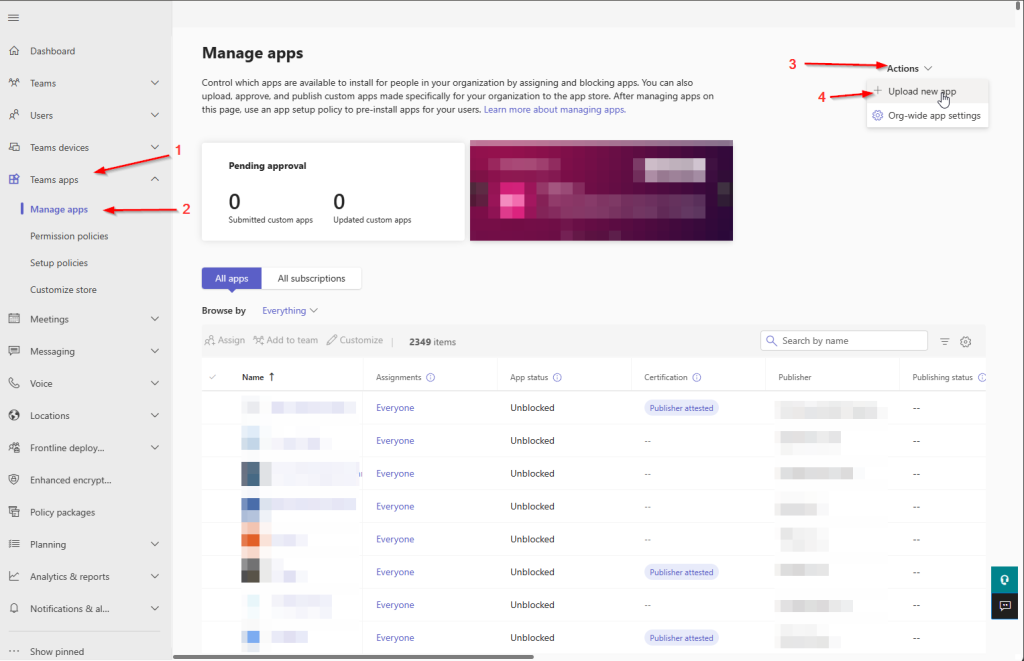
- Go to Microsoft Teams admin center.
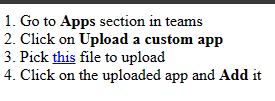
- Select Teams apps > Manage apps > Actions > Upload new app.

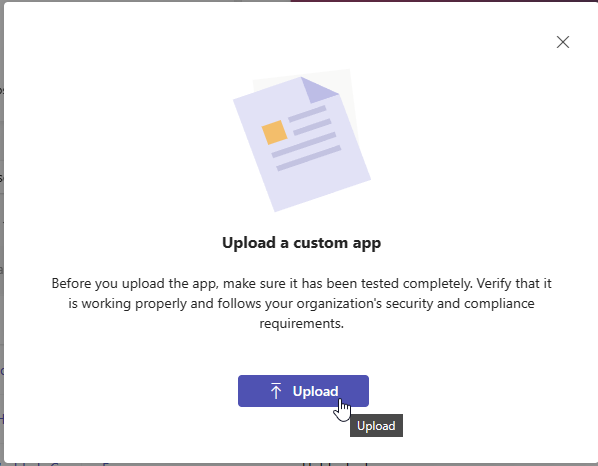
- Upload your app:

You can now start using your KanBo app in teams.
Was this article helpful?
Please, contact us if you have any additional questions.